
The Healthcare Plastics Recycling Council (HPRC) – Europe has published its latest case study, “Unlocking Recycling Potential: Automated Sorting Trials of Medical Plastic Waste.”
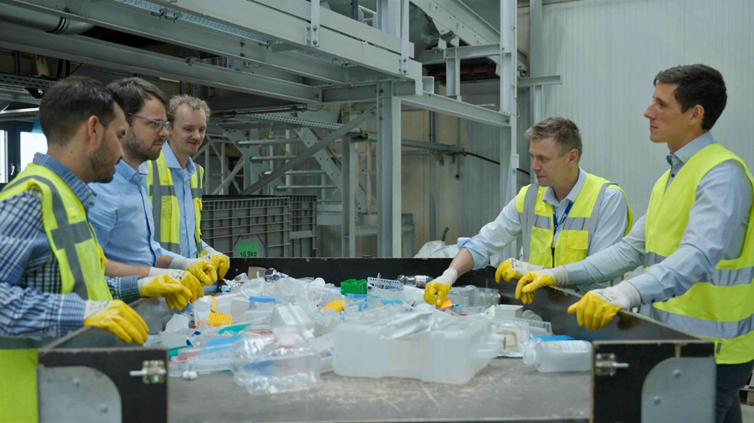
Building on insights from the first pilot in the Netherlands, which demonstrated the technical feasibility of manual sorting, this second-phase study tested automated sorting technologies under real-world conditions in Germany. Conducted in collaboration with Universitätsklinikum Bonn (UKB) and TOMRA, the trial assessed whether industrial-scale systems can reliably sort healthcare plastic packaging waste with the accuracy and throughput needed for sustainable recycling.
Key Findings:
- Waste Stream Quality Matters: Clean, well-segregated packaging can be efficiently sorted, but contamination risks remain a critical challenge.
- Automated Sorting Efficiency: 45% of rigid plastics were recovered into PP, PE, and PET streams; flexible packaging was sorted into PE, though multi-material films pose contamination risks.
- Improved Separation Strategies: Point-of-use sorting and AI-based object recognition could enhance outcomes, supported by trained staff and proper hospital systems.
- Design for Recyclability: Following HPRC’s Design Guidance improves sorting efficiency and waste value, creating potential revenue streams for hospitals.
Why It Matters:
Healthcare plastics represent a significant recycling opportunity, but scaling solutions requires collaboration across the value chain. This study provides evidence-based best practices for collection, logistics, and processing, bridging the gap between theoretical feasibility and practical implementation.
Project Partners:
Project Partners: HPRC coordinated the initiative with support from CIRCULARMED, UKB, TOMRA, and HPRC members DuPont, Amcor, LyondellBasell, Eastman, Baxter, and Nelipak.
About HPRC
HPRC is a private technical coalition of industry peers across healthcare, recycling, and waste management industries seeking to improve the recyclability of plastic products within healthcare. Made up of more than 30 brand-leading and globally recognized members collectively representing greater than $1.3 trillion in market value, HPRC explores ways to enhance the economics, efficiency, and ultimately the quality and quantity of healthcare plastics collected for recycling in support of a circular plastics economy. HPRC is active across the United States and Europe working with key stakeholders, identifying opportunities for collaboration, and participating in industry events and forums. For more information, visit www.hprc.org and follow HPRC on LinkedIn.